Construct IN
9 de dez. de 2025
NR-18: safety standard and working conditions in the construction industry
NR-18: safety standard and working conditions in the construction industry
Understand what NR-18 is, what it is for, and what its main points are—the regulatory standard for safety and working conditions in civil construction!
Understand what NR-18 is, what it is for, and what its main points are—the regulatory standard for safety and working conditions in civil construction!


Tales Silva
CEO & founder, Construct IN
cOMPARTILHE NAS REDES
cOMPARTILHE NAS REDES
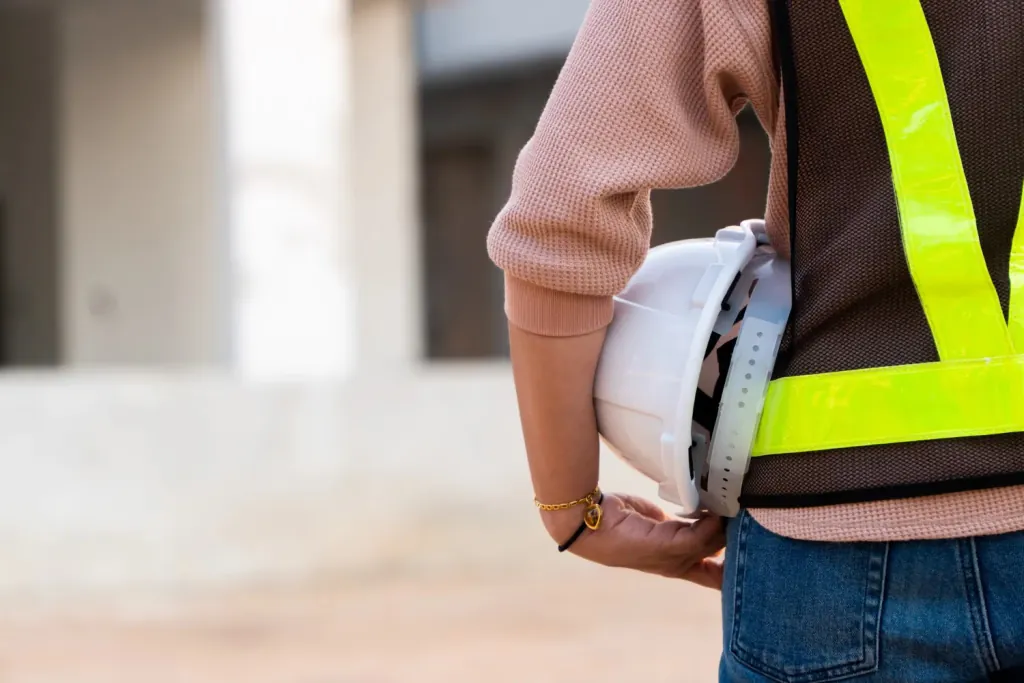
* Cover image: Freepik/patty-photo
Engineering professionals who ignore or are unaware of NR-18 run the risk of turning the construction site into a vulnerable space, where a lack of safety planning can lead to accidents, shutdowns, and even legal liabilities.
Knowing the standard means taking control of the construction and ensuring that each stage happens in an organized, protected, and sustainable way.
In this blog post, you will learn the main information about NR-18. Continue reading and check it out:
What is NR-18?
What is NR-18 used for?
Central point of NR-18: the Risk Management Program (PGR)
Construction stages in NR-18: safety requirements in each phase
Technologies that assist in risk and safety management
FAQ: frequently asked questions about the standard
Final considerations
What is NR-18?
NR-18, or Regulatory Standard 18, is a standard from the Ministry of Labor and Employment created to define the foundations of safety, health, and organization on construction sites.
It defines minimum requirements to guarantee adequate working conditions, addressing topics such as: temporary facilities and living areas, circulation and transport of materials, movement and storage of loads, collective protective equipment (EPC), individual protective equipment (EPI), risk management, safety planning, among others.
What is NR-18 used for?
In practice, NR-18 serves to ensure that the project is executed in a planned, legal, and safe manner, helping the work flow without interruptions caused by accidents, irregularities, or planning failures.
- Read also: DDS (Daily Safety Dialogue): what it is and how to apply it
Central point of NR-18: the Risk Management Program (PGR)
The Risk Management Program (PGR) is the central point of NR-18. It serves to map the risks on the construction site and define the preventive measures that will keep the team protected on a daily basis.
This plan must be prepared by a professional qualified in Occupational Safety, but there are exceptions: on construction works up to 7 meters high and with up to 10 workers, it can be made by a professional who is only qualified.
However, the responsibility for putting the PGR into practice always lies with the company executing the work.
The mandatory items of the PGR are:
A living areas design (main site and work fronts) signed by a qualified professional;
The electrical design of the temporary facilities, which must be made by an authorized specialist;
The collective protection system plans, prepared by a qualified professional and adapted to the reality of the work;
When necessary, the designs of Individual Protection Systems Against Falls (SPIQ), also under the responsibility of a qualified professional;
And the complete list of EPIs, with all technical specifications appropriate to the risks identified on the site.

Learn more about each of them below:
1. Living areas
Having an organized construction site is fundamental and, furthermore, it must also offer minimum conditions of comfort and dignity.
Therefore, NR-18 establishes rules for the so-called living areas, which must have:
Potable, fresh, and filtered water;
Sanitary facilities (with a maximum distance of 150 meters from the workplace);
Changing rooms;
A place for meals;
Lodging (when there are lodged workers).
- Read also: Construction site layout: understand its importance and how to plan
2. Collective protection measures against falls from height
Among the greatest risks in Civil Construction is working at heights. NR-18 pays special attention to this point, requiring strict measures such as:
Mandatory installation of collective protection whenever there is a risk of workers falling or objects being projected;
Protection on the perimeter of the building starting from the concreting of the first slab;
Guardrail with a top rail over 1.2 m high and a toe board of at least 0.15 m;
Floor openings protected with resistant temporary enclosures or another system against falls;
Ramps or stairs on elevation changes greater than 0.4 m.
3. Machines, equipment, and tools
The standard also reinforces that the use of machines and equipment must follow what is established in NR-12, ensuring safety in all stages.
Therefore, some of the recommendations are:
Vertical transport: on works 10 m or more in height, there must be motorized machinery or equipment for transporting materials;
Tower cranes and cranes: can only be used in accordance with the manufacturer's recommendations, with a Load Plan prepared by a qualified professional and included in the PGR. The movement of people in areas under suspended load movement is prohibited;
Elevators: must be sized by a qualified professional and comply with technical standards. People and materials cannot be transported together, except for the operator and the person responsible for the material, provided they are separated by a physical barrier;
Scaffolding: must have a design signed by a qualified professional and protection against falls along the entire perimeter, except on the work face. The height of the supported tower cannot exceed 4 times the smallest dimension of the base, unless there is anchoring or guy-wiring.
4. Electrical installations
The electrical part also receives special attention in NR-18, with requirements such as:
Compliance with NR-10, with an electrical design prepared by a qualified professional;
Prohibition of exposed and accessible live parts to unauthorized workers;
Mandatory use of the Residual Current Device (DR) as an extra safety measure.
- Read also: EPIs for civil construction: meet the main 10
Construction stages in NR-18: safety requirements in each phase
NR-18 dedicates an entire chapter to the construction stages and how each phase must be planned to avoid risks. Check out the main points:
1. Demolition
It is necessary to create a Demolition Plan, prepared by a qualified professional, containing the following information:
Disconnection and control of supply lines (electricity, water, gas, sewage, etc.);
Conditions and protection of neighboring structures;
How the removal of materials and debris will be carried out;
The destination of the removed materials, in addition to the safe movement of people and vehicles.
2. Excavation, foundation, and rock blasting
These activities can only be carried out with a technical design signed by a qualified professional. Some critical points:
Excavations deeper than 1.25 m require authorization and must have slopes or shorings sized in the design;
Manual shaft: prohibited at depths greater than 15 m. The activity can only be performed by teams trained in accordance with NRs 33 (confined spaces) and 35 (work at height);
Rock blasting with explosives: each blast needs a Blasting Plan, prepared by a qualified professional, and the area must be isolated to prevent the projection of particles.
3. Carpentry and rebar assembly
These sectors require safe and prepared areas: firm, level, non-slip floor with coverage to protect against inclement weather and falling materials.
There must be strong planks for moving over rebar assemblies. Exposed rebars that pose a risk must be protected.
4. Concrete structure
The design of the formwork and shorings must be signed by a qualified professional, including the sequence for removing the shores.
Concreting: supervised by a trained worker, with the area isolated and signaled, restricted to the responsible team;
Prestressing: during tensioning or detensioning of tie rods, the area must be isolated and people are not allowed to remain in risk zones.
5. Steel structures
Assembly, maintenance, and dismantling can only be done under the responsibility of a qualified professional. The SPIQs and worker access must be provided for in the project's PGR.
6. Hot work
Includes welding, cutting, grinding, and other activities that generate heat, sparks, or flames. Requires a specific risk analysis when there are combustible/flammable materials nearby or when the service is in an unisolated area.
There must be protection against fire, splatters, sparks, and heat. At the end, the site must be inspected to prevent fires.
7. Waterproofing
The tanks used for heating waterproofing materials must have a lid with a safety vent and a temperature gauge. The use of wood-fired heating is prohibited. All workers involved must be properly trained.
8. Roofs and coverings
It is prohibited to work on unstable, slippery surfaces or during rain and strong winds. When work is performed above 2 m in height, NR-35 applies.
Technologies that assist in risk and safety management
The Visi construction management software, by Construct IN, facilitates the visual identification of safety risks on site by using Artificial Intelligence to detect the absence of Personal Protective Equipment (EPIs).
With the INsight Safety feature, the system analyzes 360° images, recognizes a person without a helmet, and automatically creates a pinpoint at the location of the photo, ensuring compliance with NR-18 requirements and allowing immediate corrective actions to prevent accidents.
Another visual way to optimize safety management on site is by using live cameras. It is possible to install cameras at strategic points on the site to monitor risk or more critical environments through real-time images. In this way, it is possible to identify failures based on the reality of the work, avoid major problems, and make quicker decisions.
- Read also: ERP for construction companies: main benefits and when to hire
FAQ: frequently asked questions about the standard
We have gathered below the main questions about the NR-18 standard. Check it out.
What is NR-18?
NR-18 is a standard that establishes the foundations of safety, health, and organization on construction sites, defining minimum requirements for adequate working conditions.
2. What is NR-18 used for?
In practice, it serves to ensure that the work is executed in a planned, safe manner and in compliance with the legislation, avoiding accidents, irregularities, and planning failures that could lead to shutdowns, financial losses, and legal liabilities.
In practice, what does NR-18 talk about?
In practice, NR-18 deals with how the construction site must be structured and managed to reduce risks: it addresses living areas; collective protection against falls; safe use of machines, equipment, and scaffolding; temporary electrical installations; safety requirements in specific stages of the construction; and, mainly, the implementation of the Risk Management Program (PGR), which maps hazards and defines preventive actions.
Who created NR-18?
NR-18 was created by the Ministry of Labor and Employment (MTE) of Brazil, through MTb Ordinance No. 3,214 of June 8, 1978. Its creation and revisions count on the participation of tripartite technical committees (government, employers, and workers) and occupational safety specialists.
What are the main roles established by the NR-18 standard?
The main roles are: to standardize safety and health conditions on construction sites; to establish minimum criteria for organizing the work environment; to define obligations regarding the identification and control of risks through the PGR; to guide the proper use of EPCs and EPIs; to specify safety requirements for machines, equipment, electrical installations, and temporary and permanent structures; and to determine how each phase of the work must be planned to avoid accidents, ensure minimum comfort for workers, and ensure that construction proceeds without interruptions due to safety issues.
What is PCMAT in NR-18?
PCMAT (Program of Conditions and Work Environment in the Construction Industry) was the program required by NR-18 in previous versions of the standard for safety management in larger works, but with the update of the legislation, it was replaced by the focus on the Risk Management Program (PGR), which today is the central safety plan required to map risks on the site and define preventive measures.
When was the last update of NR-18?
NR-18 underwent a broad revision published in 2020, with new rules entering into force in 2021, when the focus shifted permanently to the PGR as the central instrument for risk management in construction. Since then, the standard has been adjusted through specific ordinances.
What is the validity of NR-18?
NR-18 is a permanent standard, meaning it does not have a fixed expiration date: it remains in force as long as it is not revoked or replaced by a new version, but it may undergo revisions and updates over time.
What is NR-18 training?
NR-18 training is the set of qualifications and orientations that the company must offer to construction workers so they can understand the risks of the site, know how to correctly use EPIs and EPCs, know the procedures defined in the PGR, and act safely at each stage of the construction.
NR-18 training: who can conduct it?
The training sessions provided for in NR-18 must be conducted by a legally qualified professional or by an instructor with qualification and experience compatible with the content to be taught, usually linked to the Occupational Safety area.
Final considerations
Complying with NR-18 is not just a legal obligation, it is a way to protect the team, avoid rework, and keep the work flowing safely at all stages.
And to transform what is in the standard into a daily routine on site, relying on technology makes all the difference: Visi, by Construct IN, helps you visually identify risks, monitor the use of EPIs in real time, and ensure compliance with NR-18 in a simple and practical way.
If you want to take the next step in managing the safety of your construction work, Visi is the ideal ally to put the PGR into practice and bring a culture of prevention to the daily routine of the site. Contact us and discover our solution!
Check out the full updated NR-18 in PDF here!
Engineering professionals who ignore or are unaware of NR-18 run the risk of turning the construction site into a vulnerable space, where a lack of safety planning can lead to accidents, shutdowns, and even legal liabilities.
Knowing the standard means taking control of the construction and ensuring that each stage happens in an organized, protected, and sustainable way.
In this blog post, you will learn the main information about NR-18. Continue reading and check it out:
What is NR-18?
What is NR-18 used for?
Central point of NR-18: the Risk Management Program (PGR)
Construction stages in NR-18: safety requirements in each phase
Technologies that assist in risk and safety management
FAQ: frequently asked questions about the standard
Final considerations
What is NR-18?
NR-18, or Regulatory Standard 18, is a standard from the Ministry of Labor and Employment created to define the foundations of safety, health, and organization on construction sites.
It defines minimum requirements to guarantee adequate working conditions, addressing topics such as: temporary facilities and living areas, circulation and transport of materials, movement and storage of loads, collective protective equipment (EPC), individual protective equipment (EPI), risk management, safety planning, among others.
What is NR-18 used for?
In practice, NR-18 serves to ensure that the project is executed in a planned, legal, and safe manner, helping the work flow without interruptions caused by accidents, irregularities, or planning failures.
- Read also: DDS (Daily Safety Dialogue): what it is and how to apply it
Central point of NR-18: the Risk Management Program (PGR)
The Risk Management Program (PGR) is the central point of NR-18. It serves to map the risks on the construction site and define the preventive measures that will keep the team protected on a daily basis.
This plan must be prepared by a professional qualified in Occupational Safety, but there are exceptions: on construction works up to 7 meters high and with up to 10 workers, it can be made by a professional who is only qualified.
However, the responsibility for putting the PGR into practice always lies with the company executing the work.
The mandatory items of the PGR are:
A living areas design (main site and work fronts) signed by a qualified professional;
The electrical design of the temporary facilities, which must be made by an authorized specialist;
The collective protection system plans, prepared by a qualified professional and adapted to the reality of the work;
When necessary, the designs of Individual Protection Systems Against Falls (SPIQ), also under the responsibility of a qualified professional;
And the complete list of EPIs, with all technical specifications appropriate to the risks identified on the site.
Learn more about each of them below:
1. Living areas
Having an organized construction site is fundamental and, furthermore, it must also offer minimum conditions of comfort and dignity.
Therefore, NR-18 establishes rules for the so-called living areas, which must have:
Potable, fresh, and filtered water;
Sanitary facilities (with a maximum distance of 150 meters from the workplace);
Changing rooms;
A place for meals;
Lodging (when there are lodged workers).
- Read also: Construction site layout: understand its importance and how to plan
2. Collective protection measures against falls from height
Among the greatest risks in Civil Construction is working at heights. NR-18 pays special attention to this point, requiring strict measures such as:
Mandatory installation of collective protection whenever there is a risk of workers falling or objects being projected;
Protection on the perimeter of the building starting from the concreting of the first slab;
Guardrail with a top rail over 1.2 m high and a toe board of at least 0.15 m;
Floor openings protected with resistant temporary enclosures or another system against falls;
Ramps or stairs on elevation changes greater than 0.4 m.
3. Machines, equipment, and tools
The standard also reinforces that the use of machines and equipment must follow what is established in NR-12, ensuring safety in all stages.
Therefore, some of the recommendations are:
Vertical transport: on works 10 m or more in height, there must be motorized machinery or equipment for transporting materials;
Tower cranes and cranes: can only be used in accordance with the manufacturer's recommendations, with a Load Plan prepared by a qualified professional and included in the PGR. The movement of people in areas under suspended load movement is prohibited;
Elevators: must be sized by a qualified professional and comply with technical standards. People and materials cannot be transported together, except for the operator and the person responsible for the material, provided they are separated by a physical barrier;
Scaffolding: must have a design signed by a qualified professional and protection against falls along the entire perimeter, except on the work face. The height of the supported tower cannot exceed 4 times the smallest dimension of the base, unless there is anchoring or guy-wiring.
4. Electrical installations
The electrical part also receives special attention in NR-18, with requirements such as:
Compliance with NR-10, with an electrical design prepared by a qualified professional;
Prohibition of exposed and accessible live parts to unauthorized workers;
Mandatory use of the Residual Current Device (DR) as an extra safety measure.
- Read also: EPIs for civil construction: meet the main 10
Construction stages in NR-18: safety requirements in each phase
NR-18 dedicates an entire chapter to the construction stages and how each phase must be planned to avoid risks. Check out the main points:
1. Demolition
It is necessary to create a Demolition Plan, prepared by a qualified professional, containing the following information:
Disconnection and control of supply lines (electricity, water, gas, sewage, etc.);
Conditions and protection of neighboring structures;
How the removal of materials and debris will be carried out;
The destination of the removed materials, in addition to the safe movement of people and vehicles.
2. Excavation, foundation, and rock blasting
These activities can only be carried out with a technical design signed by a qualified professional. Some critical points:
Excavations deeper than 1.25 m require authorization and must have slopes or shorings sized in the design;
Manual shaft: prohibited at depths greater than 15 m. The activity can only be performed by teams trained in accordance with NRs 33 (confined spaces) and 35 (work at height);
Rock blasting with explosives: each blast needs a Blasting Plan, prepared by a qualified professional, and the area must be isolated to prevent the projection of particles.
3. Carpentry and rebar assembly
These sectors require safe and prepared areas: firm, level, non-slip floor with coverage to protect against inclement weather and falling materials.
There must be strong planks for moving over rebar assemblies. Exposed rebars that pose a risk must be protected.
4. Concrete structure
The design of the formwork and shorings must be signed by a qualified professional, including the sequence for removing the shores.
Concreting: supervised by a trained worker, with the area isolated and signaled, restricted to the responsible team;
Prestressing: during tensioning or detensioning of tie rods, the area must be isolated and people are not allowed to remain in risk zones.
5. Steel structures
Assembly, maintenance, and dismantling can only be done under the responsibility of a qualified professional. The SPIQs and worker access must be provided for in the project's PGR.
6. Hot work
Includes welding, cutting, grinding, and other activities that generate heat, sparks, or flames. Requires a specific risk analysis when there are combustible/flammable materials nearby or when the service is in an unisolated area.
There must be protection against fire, splatters, sparks, and heat. At the end, the site must be inspected to prevent fires.
7. Waterproofing
The tanks used for heating waterproofing materials must have a lid with a safety vent and a temperature gauge. The use of wood-fired heating is prohibited. All workers involved must be properly trained.
8. Roofs and coverings
It is prohibited to work on unstable, slippery surfaces or during rain and strong winds. When work is performed above 2 m in height, NR-35 applies.
Technologies that assist in risk and safety management
The Visi construction management software, by Construct IN, facilitates the visual identification of safety risks on site by using Artificial Intelligence to detect the absence of Personal Protective Equipment (EPIs).
With the INsight Safety feature, the system analyzes 360° images, recognizes a person without a helmet, and automatically creates a pinpoint at the location of the photo, ensuring compliance with NR-18 requirements and allowing immediate corrective actions to prevent accidents.
Another visual way to optimize safety management on site is by using live cameras. It is possible to install cameras at strategic points on the site to monitor risk or more critical environments through real-time images. In this way, it is possible to identify failures based on the reality of the work, avoid major problems, and make quicker decisions.
- Read also: ERP for construction companies: main benefits and when to hire
FAQ: frequently asked questions about the standard
We have gathered below the main questions about the NR-18 standard. Check it out.
What is NR-18?
NR-18 is a standard that establishes the foundations of safety, health, and organization on construction sites, defining minimum requirements for adequate working conditions.
2. What is NR-18 used for?
In practice, it serves to ensure that the work is executed in a planned, safe manner and in compliance with the legislation, avoiding accidents, irregularities, and planning failures that could lead to shutdowns, financial losses, and legal liabilities.
In practice, what does NR-18 talk about?
In practice, NR-18 deals with how the construction site must be structured and managed to reduce risks: it addresses living areas; collective protection against falls; safe use of machines, equipment, and scaffolding; temporary electrical installations; safety requirements in specific stages of the construction; and, mainly, the implementation of the Risk Management Program (PGR), which maps hazards and defines preventive actions.
Who created NR-18?
NR-18 was created by the Ministry of Labor and Employment (MTE) of Brazil, through MTb Ordinance No. 3,214 of June 8, 1978. Its creation and revisions count on the participation of tripartite technical committees (government, employers, and workers) and occupational safety specialists.
What are the main roles established by the NR-18 standard?
The main roles are: to standardize safety and health conditions on construction sites; to establish minimum criteria for organizing the work environment; to define obligations regarding the identification and control of risks through the PGR; to guide the proper use of EPCs and EPIs; to specify safety requirements for machines, equipment, electrical installations, and temporary and permanent structures; and to determine how each phase of the work must be planned to avoid accidents, ensure minimum comfort for workers, and ensure that construction proceeds without interruptions due to safety issues.
What is PCMAT in NR-18?
PCMAT (Program of Conditions and Work Environment in the Construction Industry) was the program required by NR-18 in previous versions of the standard for safety management in larger works, but with the update of the legislation, it was replaced by the focus on the Risk Management Program (PGR), which today is the central safety plan required to map risks on the site and define preventive measures.
When was the last update of NR-18?
NR-18 underwent a broad revision published in 2020, with new rules entering into force in 2021, when the focus shifted permanently to the PGR as the central instrument for risk management in construction. Since then, the standard has been adjusted through specific ordinances.
What is the validity of NR-18?
NR-18 is a permanent standard, meaning it does not have a fixed expiration date: it remains in force as long as it is not revoked or replaced by a new version, but it may undergo revisions and updates over time.
What is NR-18 training?
NR-18 training is the set of qualifications and orientations that the company must offer to construction workers so they can understand the risks of the site, know how to correctly use EPIs and EPCs, know the procedures defined in the PGR, and act safely at each stage of the construction.
NR-18 training: who can conduct it?
The training sessions provided for in NR-18 must be conducted by a legally qualified professional or by an instructor with qualification and experience compatible with the content to be taught, usually linked to the Occupational Safety area.
Final considerations
Complying with NR-18 is not just a legal obligation, it is a way to protect the team, avoid rework, and keep the work flowing safely at all stages.
And to transform what is in the standard into a daily routine on site, relying on technology makes all the difference: Visi, by Construct IN, helps you visually identify risks, monitor the use of EPIs in real time, and ensure compliance with NR-18 in a simple and practical way.
If you want to take the next step in managing the safety of your construction work, Visi is the ideal ally to put the PGR into practice and bring a culture of prevention to the daily routine of the site. Contact us and discover our solution!
Check out the full updated NR-18 in PDF here!
* Cover image: Freepik/patty-photo
Sobre o autor
Tales Silva
CEO & founder, Construct IN
Tales Silva é Engenheiro Civil formado pela PUCRS (2016) e possui MBA Executivo com foco em marketing pela ESPM-Sul (2019). Tem experiência em projetos estruturais e em construções industrializadas. É fundador e CEO da Construct IN, construtech que oferece uma plataforma de gestão e documentação de obras por meio de imagens 360º.
cOMPARTILHE NAS REDES
Recomendado para você
carregar mais ↓

Subscribe to our newsletter
Explore nossas soluções
Entre em contato e descubra como a captura da realidade e dados centralizados podem ser a solução para a gestão de suas obras.
