Construct IN
12 de nov. de 2025
WBS (Work Breakdown Structure) in civil construction: what it is and how to create it
WBS (Work Breakdown Structure) in civil construction: what it is and how to create it
Understand what a WBS (Work Breakdown Structure) is, and learn how to create one in civil construction. Also, see how Visi software can help you!
Understand what a WBS (Work Breakdown Structure) is, and learn how to create one in civil construction. Also, see how Visi software can help you!


Tales Silva
CEO & founder, Construct IN
cOMPARTILHE NAS REDES
cOMPARTILHE NAS REDES

* Cover image: Freepik
Managing a construction project without a pre-defined WBS, Work Breakdown Structure, is an arduous and complex task.
Without this structure, it is common to deal with delayed tasks, missed deadlines, and a lack of control over costs and resources.
To avoid this, the WBS organizes deliverables, defines responsibilities, and helps track each stage of construction with greater clarity.
Continue reading to understand more about the process. By the end of the article, check out:
What is WBS?
3 advantages of the Work Breakdown Structure
Step-by-step on how to build a WBS
FAQ: frequently asked questions about project WBS
Start tracking your construction projects with Visi!
What is WBS?
The Work Breakdown Structure (WBS) is the process that organizes and divides the scope of a project (such as building a construction project) into smaller parts to facilitate planning, execution, and control.
Other common names for this technique are WBS or Work Decomposition Structure.
- Read also: Project management in construction: how to manage multiple projects with a limited team?

3 advantages of the Work Breakdown Structure
With it, the construction manager can define and manage scope, plan time and costs, and manage the project. Understand better:
1. Scope definition and management
The WBS is essential to organize and delimit everything that is part of the project, representing 100% of the planned deliverables.
It decomposes into smaller, deliverable parts, establishing clear boundaries on what will be executed, which is ideal for the stages of construction.
This structure allows mapping each necessary activity, preventing omissions that could generate cost and schedule imbalances.
In addition, the most detailed levels, called work packages, define resources, construction schedules, and execution responsibilities.
2. Time and cost planning
With a structured WBS, construction planning becomes much more assertive. From it, it is possible to develop the physical schedule, which defines the duration of activities, the deadlines of each stage, and the executive sequence.
In the same process, the budget is estimated with greater precision, allowing resource allocation and investment forecasting.
Costs are summed up hierarchically, which facilitates financial control and ensures traceability.
Additionally, the WBS facilitates the identification and allocation of materials, equipment, and teams.
- Read also: Physical-financial construction schedule: what it is and how to create it
3. Ease of management and control
The WBS ensures that everyone involved has a clear view of what needs to be done.
It provides a complete visualization of the scope, highlighting interdependencies between activities and assisting in the detailed planning of time, cost, quality, and risks.
It also simplifies communication between estimators, engineers, and managers. Finally, since the WBS divides large projects into smaller parts, it becomes easier to plan, control, and adjust all details as the work progresses.

Step-by-step on how to build a WBS
These are the eight steps to create a good Work Breakdown Structure (WBS) in Civil Construction.
1. Define project name
The project name should represent the final product or main deliverable.
2. Associate the main phases or deliverables
List the phases of the construction life cycle, such as: feasibility study, design, planning, execution, and construction tracking. Each phase represents a refinement of the previous level.
3. Add deliverables and sub-products
Identify the deliverables and sub-deliverables that make up each phase. Anything not in the WBS is not part of the scope.
4. Divide into work packages
Divide the project into smaller levels until reaching controllable activities. These packages are the basis for estimating time, cost, and resources. They must follow these rules:
The detailing must be sufficient for management without bureaucracy;
The sum of the "child" elements must represent 100% of the "parent" element;
Each package must have an identification code (e.g., 1.1.1).
5. Review and validate
Before approval, verify: whether the WBS covers 100% of the scope, whether descriptions are concrete and objective, whether the level of detail is appropriate for control, and whether there is coherence in decomposition and realistic durations.
6. Detail each component
Describe the work, assumptions, responsible parties, costs, and acceptance criteria.
By doing this, everyone understands the scope in the same way, preventing different interpretations among teams.
7. Begin construction tracking
After structuring the WBS and defining the work packages, the most critical moment arrives: tracking whether what was planned is actually happening on the field.
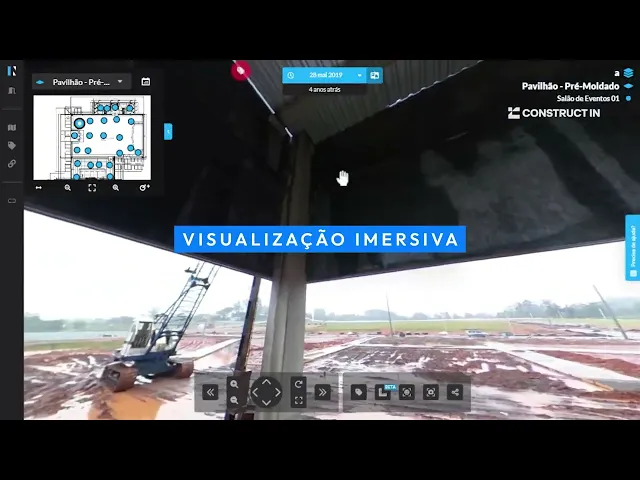
This is where Visi comes in, the reality capture software aimed at visual tracking of the job site. With it, each stage planned in the WBS can be validated based on 360° ground images and videos, aerial records, and now, drone mapping.
Thus, the manager visualizes the physical progress of each work front, identifies deviations, and makes decisions based on real evidence.
FAQ: frequently asked questions about project WBS
What is the meaning of the acronym WBS?
WBS stands for Work Breakdown Structure.
What is a WBS?
The WBS is the technique that organizes and divides the scope of a project (for example, the construction of a building) into smaller, deliverable parts to facilitate planning, execution, and control.
What is the function of the WBS?
The main function of the WBS is to ensure that a project is planned, tracked, and controlled efficiently. It defines what will be done, who is responsible, what resources will be used, and how progress will be measured, ensuring more clarity and predictability in execution.
How to create a WBS?
To build a WBS, start by defining the project name, associate the main phases or deliverables, add deliverables and sub-deliverables that make up each phase, divide into lower-level work packages, review and validate covering 100% of the scope and realistic durations, detail each component, and finally, begin tracking to validate the progress of the planned stages.
What is the 100% rule in the WBS?
The 100% rule establishes that the WBS must represent the entire project scope, with no missing or duplicated activities. In other words, the sum of all sub-products (lower levels) must correspond exactly to 100% of the main product defined at the higher level.
Start tracking your construction projects with Visi!
Visi is the pioneering reality capture construction management software that brings a revolution in construction control to Brazil and Latin America. Request a free demo!
Managing a construction project without a pre-defined WBS, Work Breakdown Structure, is an arduous and complex task.
Without this structure, it is common to deal with delayed tasks, missed deadlines, and a lack of control over costs and resources.
To avoid this, the WBS organizes deliverables, defines responsibilities, and helps track each stage of construction with greater clarity.
Continue reading to understand more about the process. By the end of the article, check out:
What is WBS?
3 advantages of the Work Breakdown Structure
Step-by-step on how to build a WBS
FAQ: frequently asked questions about project WBS
Start tracking your construction projects with Visi!
What is WBS?
The Work Breakdown Structure (WBS) is the process that organizes and divides the scope of a project (such as building a construction project) into smaller parts to facilitate planning, execution, and control.
Other common names for this technique are WBS or Work Decomposition Structure.
- Read also: Project management in construction: how to manage multiple projects with a limited team?
3 advantages of the Work Breakdown Structure
With it, the construction manager can define and manage scope, plan time and costs, and manage the project. Understand better:
1. Scope definition and management
The WBS is essential to organize and delimit everything that is part of the project, representing 100% of the planned deliverables.
It decomposes into smaller, deliverable parts, establishing clear boundaries on what will be executed, which is ideal for the stages of construction.
This structure allows mapping each necessary activity, preventing omissions that could generate cost and schedule imbalances.
In addition, the most detailed levels, called work packages, define resources, construction schedules, and execution responsibilities.
2. Time and cost planning
With a structured WBS, construction planning becomes much more assertive. From it, it is possible to develop the physical schedule, which defines the duration of activities, the deadlines of each stage, and the executive sequence.
In the same process, the budget is estimated with greater precision, allowing resource allocation and investment forecasting.
Costs are summed up hierarchically, which facilitates financial control and ensures traceability.
Additionally, the WBS facilitates the identification and allocation of materials, equipment, and teams.
- Read also: Physical-financial construction schedule: what it is and how to create it
3. Ease of management and control
The WBS ensures that everyone involved has a clear view of what needs to be done.
It provides a complete visualization of the scope, highlighting interdependencies between activities and assisting in the detailed planning of time, cost, quality, and risks.
It also simplifies communication between estimators, engineers, and managers. Finally, since the WBS divides large projects into smaller parts, it becomes easier to plan, control, and adjust all details as the work progresses.
Step-by-step on how to build a WBS
These are the eight steps to create a good Work Breakdown Structure (WBS) in Civil Construction.
1. Define project name
The project name should represent the final product or main deliverable.
2. Associate the main phases or deliverables
List the phases of the construction life cycle, such as: feasibility study, design, planning, execution, and construction tracking. Each phase represents a refinement of the previous level.
3. Add deliverables and sub-products
Identify the deliverables and sub-deliverables that make up each phase. Anything not in the WBS is not part of the scope.
4. Divide into work packages
Divide the project into smaller levels until reaching controllable activities. These packages are the basis for estimating time, cost, and resources. They must follow these rules:
The detailing must be sufficient for management without bureaucracy;
The sum of the "child" elements must represent 100% of the "parent" element;
Each package must have an identification code (e.g., 1.1.1).
5. Review and validate
Before approval, verify: whether the WBS covers 100% of the scope, whether descriptions are concrete and objective, whether the level of detail is appropriate for control, and whether there is coherence in decomposition and realistic durations.
6. Detail each component
Describe the work, assumptions, responsible parties, costs, and acceptance criteria.
By doing this, everyone understands the scope in the same way, preventing different interpretations among teams.
7. Begin construction tracking
After structuring the WBS and defining the work packages, the most critical moment arrives: tracking whether what was planned is actually happening on the field.
This is where Visi comes in, the reality capture software aimed at visual tracking of the job site. With it, each stage planned in the WBS can be validated based on 360° ground images and videos, aerial records, and now, drone mapping.
Thus, the manager visualizes the physical progress of each work front, identifies deviations, and makes decisions based on real evidence.
FAQ: frequently asked questions about project WBS
What is the meaning of the acronym WBS?
WBS stands for Work Breakdown Structure.
What is a WBS?
The WBS is the technique that organizes and divides the scope of a project (for example, the construction of a building) into smaller, deliverable parts to facilitate planning, execution, and control.
What is the function of the WBS?
The main function of the WBS is to ensure that a project is planned, tracked, and controlled efficiently. It defines what will be done, who is responsible, what resources will be used, and how progress will be measured, ensuring more clarity and predictability in execution.
How to create a WBS?
To build a WBS, start by defining the project name, associate the main phases or deliverables, add deliverables and sub-deliverables that make up each phase, divide into lower-level work packages, review and validate covering 100% of the scope and realistic durations, detail each component, and finally, begin tracking to validate the progress of the planned stages.
What is the 100% rule in the WBS?
The 100% rule establishes that the WBS must represent the entire project scope, with no missing or duplicated activities. In other words, the sum of all sub-products (lower levels) must correspond exactly to 100% of the main product defined at the higher level.
Start tracking your construction projects with Visi!
Visi is the pioneering reality capture construction management software that brings a revolution in construction control to Brazil and Latin America. Request a free demo!
* Cover image: Freepik
Sobre o autor
Tales Silva
CEO & founder, Construct IN
Tales Silva é Engenheiro Civil formado pela PUCRS (2016) e possui MBA Executivo com foco em marketing pela ESPM-Sul (2019). Tem experiência em projetos estruturais e em construções industrializadas. É fundador e CEO da Construct IN, construtech que oferece uma plataforma de gestão e documentação de obras por meio de imagens 360º.
cOMPARTILHE NAS REDES
Recomendado para você
carregar mais ↓




Subscribe to our newsletter
Explore nossas soluções
Entre em contato e descubra como a captura da realidade e dados centralizados podem ser a solução para a gestão de suas obras.
