Construct IN
Cases
10 de out. de 2025
Construction Diary (RDO): what it is and how to create yours at Construct IN
Construction Diary (RDO): what it is and how to create yours at Construct IN
Understand what a Daily Work Log is, also known as a Daily Progress Report. See the benefits and tips for building yours in Visi, by Construct In!
Understand what a Daily Work Log is, also known as a Daily Progress Report. See the benefits and tips for building yours in Visi, by Construct In!


Tales Silva
CEO & founder, Construct IN
cOMPARTILHE NAS REDES
cOMPARTILHE NAS REDES

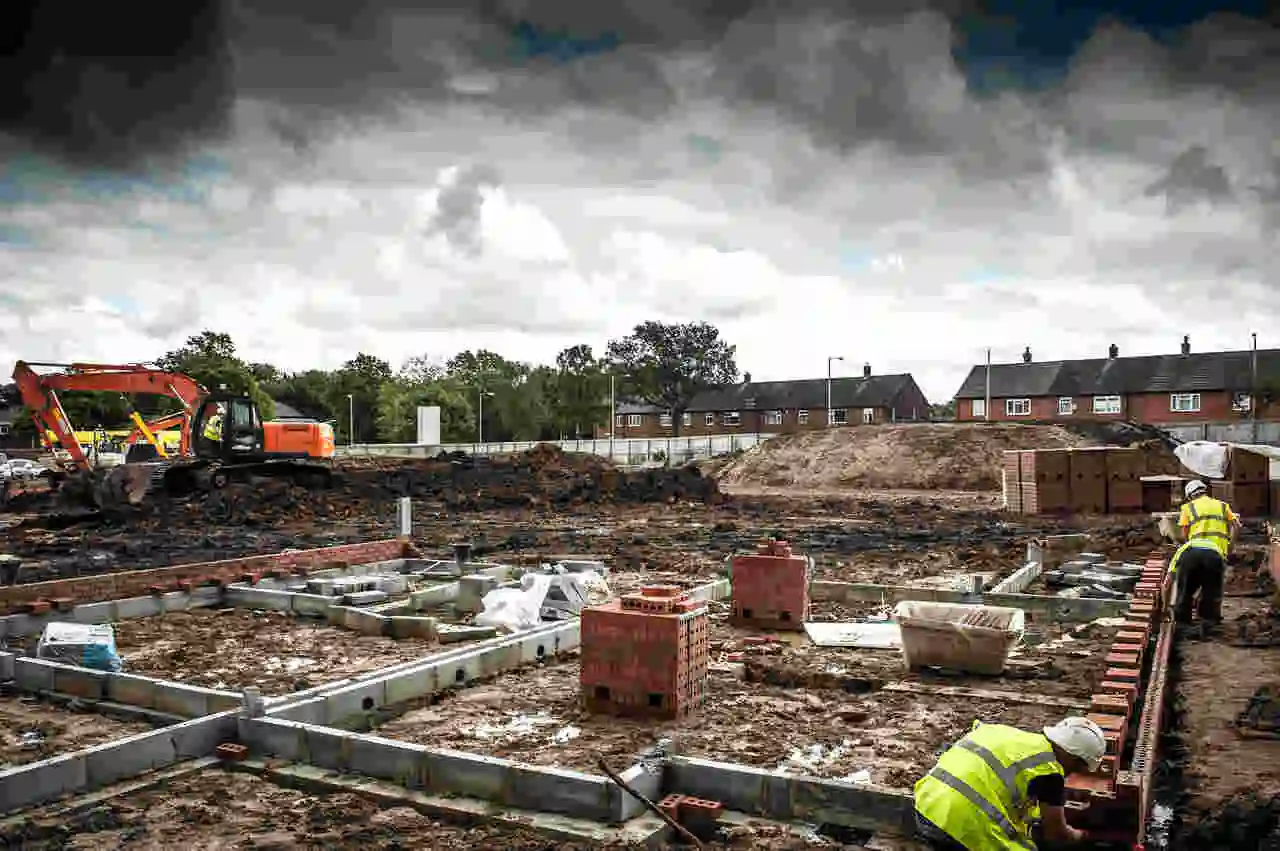
*Cover image: Freepik/user6724086
More than a simple document, the Daily Work Report (RDO) is mandatory in some cases. In addition, it helps to monitor each construction stage, detect problems quickly, and keep the project on track. In this article, you will discover everything about this document.
Continue reading and check out:
What is a Daily Work Report (RDO)?
Who should prepare the Daily Work Report?
Is it mandatory to have a Daily Work Report?
Benefits of creating a good Daily Work Report
Tips for creating an efficient Daily Work Report
FAQ: frequently asked questions about the RDO
Create your Daily Work Report with Visi, by Construct IN!
What is a Daily Work Report (RDO)?
The Daily Work Report, also known as the Relatório Diário de Obra (RDO), documents the activities carried out at the site for monitoring construction projects every day.
In general, the most common pieces of information are:
Labor;
Materials used;
Weather conditions;
Equipment used.
It can be structured in various ways, including with the help of the remote construction monitoring platform here at Construct IN, Visi.
- Also read: Order Book: what it is, how to use it, and differences from the RDO
Who should prepare the Daily Work Report?
The Daily Work Report must be filled out by the responsible engineer or a qualified technician.
This professional must have a solid understanding of the construction progress and check all recorded information.
Is it mandatory to have a Daily Work Report?
The Daily Work Report is mandatory in many cases, especially in public works or large-scale projects, as per legal or contractual requirements. Even when it is not, it becomes essential to ensure project transparency and control.

Benefits of creating a good Daily Work Report
1. Improvement in project management
The RDO provides a detailed view of daily activities. It facilitates construction management by tracking the schedule to avoid construction delays. It also helps in identifying deviations or issues that might require adjustments.
2. Legal documentation
In the event of contractual disputes or litigation, the Daily Work Report serves as an official document that can be used as evidence in legal proceedings.
3. Effective communication
It is an important communication tool among the different stakeholders. It ensures that everyone has access to the same information and can align their expectations and actions.
- Also read: How to put an end to the decentralization of information on the construction site?
4. Informed decision-making
With the data recorded in the Daily Work Report, project managers can make more assertive, fact-based decisions. Furthermore, it helps optimize project progress and minimize risks.
- Also read: Service Verification Sheet (FVS): what it is and what it is used for
Tips for creating an efficient Daily Work Report
To create a good Daily Work Report, follow these steps:
1. Use digital tools with Daily Work Report features
A great option is to contract our remote construction management platform, Visi.
Among various features, such as captured 360° images, dashboards, and integration with BIM, our tool also generates reports such as the “Daily Work Report.”
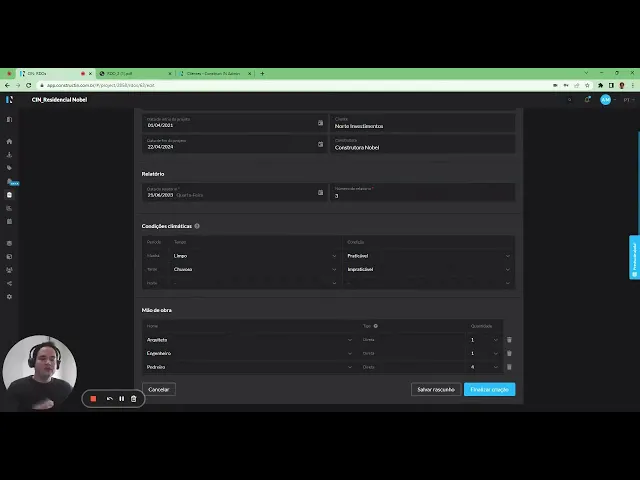
Watch the video to understand:
2. Create an RDO template
If you choose Visi, you will have a pre-made Daily Work Report template. When you click the create button, the tool will automatically pull the following project data:
Name;
Construction site address;
Start and end date;
Contract number;
Client's name;
Construction company.
In addition, other fields appear for you to register quickly on Construct IN's platform:
Weather conditions throughout the day;
Labor;
Equipment;
Comments;
Photo gallery.
We also recently released an update to improve this functionality even further:

- Also read: Photographic Report of Construction: importance and how to do it
3. Fill it out daily
The RDO must be filled out every day, preferably at the end of the shift, to ensure that the information is up-to-date and accurate.
With Visi's Daily Work Report feature, generating these reports daily becomes much easier and faster. Just duplicate the previous day's RDO, update the necessary information and completed activities, and it will be ready.
- Also read: Site Visit Report: what it is and how to do it
4. Detail the activities
Describe all activities carried out at the construction site and include details, such as the execution of foundations, installations, among others.
In our Daily Work Report tool, in the “Activities” section, simply add the one you want, set the status and the percentage.
5. Record labor and equipment
List the teams present, specifying roles and hours worked. It is also important to record the equipment used and its condition. Within our tool, you can also log these details quickly.
6. Report occurrences and unforeseen events
Report adverse situations, weather issues, delays, or accidents and how these occurrences affected the schedule.
For this, our platform provides two fields for the construction manager to report all unforeseen events and write other comments.

Example of a filled-out daily work report
Check below an example of a filled-out daily work report. This example is simplified for illustrative purposes only.
Field | Recorded information |
|---|---|
Project | Jardim das Acácias Residential Tower |
Date | 10/10/2025 |
Responsible | Eng. João Silva – CREA PR-0000000 |
Weather conditions | Clear morning; cloudy afternoon; light rain at 4:00 PM with no impact |
Labor (27 people) | Bricklayers, carpenters, steel fixers, electricians, plumbers, foreman, and safety technician |
Equipment | Crane, concrete mixer, and vibrator operating; aerial work platform undergoing preventive maintenance |
Daily Activities |
|
Materials used | Concrete, steel, ceramic blocks, and mortar according to planning |
Occurrences | Light rain and equipment maintenance with no delays |
Photos | Images attached to the platform |
Next day planning | Finalize the structure of the 8th floor and advance installations on the 6th and 7th floors |
Filled out by | Responsible technician |
Approved by | Project engineer |
FAQ: frequently asked questions about the RDO
Check out the main questions about the Daily Work Report below. Some have already been answered throughout the article, but we gathered them all here for easier reference.
What does the acronym RDO stand for?
RDO stands for Relatório Diário de Obra (Daily Work Report).
What is a Daily Work Report?
It is the daily record of construction activities, with information such as labor, materials used, weather conditions, and equipment employed; it can be structured in different ways, including with the support of software, like Visi by Construct IN.
What is the Daily Work Report used for?
It helps track each stage of the construction, quickly identify deviations, and keep the project on track, in addition to being a single source of information for the team and partners, aligning expectations and facilitating fact-based decisions.
What is the importance of the Daily Work Report?
In many cases, it is mandatory due to legal or contractual requirements (especially in public works or large projects) and, even when it is not, it becomes essential for transparency, schedule control, communication between parties, and legal documentation in potential disputes.
What should be included in a Daily Work Report?
The most common fields are labor present, materials used, weather conditions, equipment employed, activities performed, and occurrences.
How to create a good Daily Work Report?
Fill it out daily, preferably at the end of the shift, detail activities with status and percentages, record teams and equipment (with hours and conditions), report unforeseen events and schedule impacts, and use digital tools like Visi to standardize templates.
Where to buy a Daily Work Report?
Instead of buying a standalone template, you can create and standardize your Daily Work Report directly in Visi, by Construct IN, which offers the RDO template, pulls project data automatically, and speeds up daily entry with logs, photos, and ready-to-use reports.
Create your Daily Work Report with Construct IN!
Our construction management software allows you to record every detail of the construction in an organized and centralized way, ensuring transparency and efficiency.
In addition to the RDO, Visi offers features to capture 360° images, store all project documentation in one place, and eliminate information loss in emails or messaging apps.
Join our more than 200 clients, such as Afonso França and Construtora LK2. Schedule a free demo.
More than a simple document, the Daily Work Report (RDO) is mandatory in some cases. In addition, it helps to monitor each construction stage, detect problems quickly, and keep the project on track. In this article, you will discover everything about this document.
Continue reading and check out:
What is a Daily Work Report (RDO)?
Who should prepare the Daily Work Report?
Is it mandatory to have a Daily Work Report?
Benefits of creating a good Daily Work Report
Tips for creating an efficient Daily Work Report
FAQ: frequently asked questions about the RDO
Create your Daily Work Report with Visi, by Construct IN!
What is a Daily Work Report (RDO)?
The Daily Work Report, also known as the Relatório Diário de Obra (RDO), documents the activities carried out at the site for monitoring construction projects every day.
In general, the most common pieces of information are:
Labor;
Materials used;
Weather conditions;
Equipment used.
It can be structured in various ways, including with the help of the remote construction monitoring platform here at Construct IN, Visi.
- Also read: Order Book: what it is, how to use it, and differences from the RDO
Who should prepare the Daily Work Report?
The Daily Work Report must be filled out by the responsible engineer or a qualified technician.
This professional must have a solid understanding of the construction progress and check all recorded information.
Is it mandatory to have a Daily Work Report?
The Daily Work Report is mandatory in many cases, especially in public works or large-scale projects, as per legal or contractual requirements. Even when it is not, it becomes essential to ensure project transparency and control.
Benefits of creating a good Daily Work Report
1. Improvement in project management
The RDO provides a detailed view of daily activities. It facilitates construction management by tracking the schedule to avoid construction delays. It also helps in identifying deviations or issues that might require adjustments.
2. Legal documentation
In the event of contractual disputes or litigation, the Daily Work Report serves as an official document that can be used as evidence in legal proceedings.
3. Effective communication
It is an important communication tool among the different stakeholders. It ensures that everyone has access to the same information and can align their expectations and actions.
- Also read: How to put an end to the decentralization of information on the construction site?
4. Informed decision-making
With the data recorded in the Daily Work Report, project managers can make more assertive, fact-based decisions. Furthermore, it helps optimize project progress and minimize risks.
- Also read: Service Verification Sheet (FVS): what it is and what it is used for
Tips for creating an efficient Daily Work Report
To create a good Daily Work Report, follow these steps:
1. Use digital tools with Daily Work Report features
A great option is to contract our remote construction management platform, Visi.
Among various features, such as captured 360° images, dashboards, and integration with BIM, our tool also generates reports such as the “Daily Work Report.”
Watch the video to understand:
2. Create an RDO template
If you choose Visi, you will have a pre-made Daily Work Report template. When you click the create button, the tool will automatically pull the following project data:
Name;
Construction site address;
Start and end date;
Contract number;
Client's name;
Construction company.
In addition, other fields appear for you to register quickly on Construct IN's platform:
Weather conditions throughout the day;
Labor;
Equipment;
Comments;
Photo gallery.
We also recently released an update to improve this functionality even further:
- Also read: Photographic Report of Construction: importance and how to do it
3. Fill it out daily
The RDO must be filled out every day, preferably at the end of the shift, to ensure that the information is up-to-date and accurate.
With Visi's Daily Work Report feature, generating these reports daily becomes much easier and faster. Just duplicate the previous day's RDO, update the necessary information and completed activities, and it will be ready.
- Also read: Site Visit Report: what it is and how to do it
4. Detail the activities
Describe all activities carried out at the construction site and include details, such as the execution of foundations, installations, among others.
In our Daily Work Report tool, in the “Activities” section, simply add the one you want, set the status and the percentage.
5. Record labor and equipment
List the teams present, specifying roles and hours worked. It is also important to record the equipment used and its condition. Within our tool, you can also log these details quickly.
6. Report occurrences and unforeseen events
Report adverse situations, weather issues, delays, or accidents and how these occurrences affected the schedule.
For this, our platform provides two fields for the construction manager to report all unforeseen events and write other comments.
Example of a filled-out daily work report
Check below an example of a filled-out daily work report. This example is simplified for illustrative purposes only.
Field | Recorded information |
|---|---|
Project | Jardim das Acácias Residential Tower |
Date | 10/10/2025 |
Responsible | Eng. João Silva – CREA PR-0000000 |
Weather conditions | Clear morning; cloudy afternoon; light rain at 4:00 PM with no impact |
Labor (27 people) | Bricklayers, carpenters, steel fixers, electricians, plumbers, foreman, and safety technician |
Equipment | Crane, concrete mixer, and vibrator operating; aerial work platform undergoing preventive maintenance |
Daily Activities |
|
Materials used | Concrete, steel, ceramic blocks, and mortar according to planning |
Occurrences | Light rain and equipment maintenance with no delays |
Photos | Images attached to the platform |
Next day planning | Finalize the structure of the 8th floor and advance installations on the 6th and 7th floors |
Filled out by | Responsible technician |
Approved by | Project engineer |
FAQ: frequently asked questions about the RDO
Check out the main questions about the Daily Work Report below. Some have already been answered throughout the article, but we gathered them all here for easier reference.
What does the acronym RDO stand for?
RDO stands for Relatório Diário de Obra (Daily Work Report).
What is a Daily Work Report?
It is the daily record of construction activities, with information such as labor, materials used, weather conditions, and equipment employed; it can be structured in different ways, including with the support of software, like Visi by Construct IN.
What is the Daily Work Report used for?
It helps track each stage of the construction, quickly identify deviations, and keep the project on track, in addition to being a single source of information for the team and partners, aligning expectations and facilitating fact-based decisions.
What is the importance of the Daily Work Report?
In many cases, it is mandatory due to legal or contractual requirements (especially in public works or large projects) and, even when it is not, it becomes essential for transparency, schedule control, communication between parties, and legal documentation in potential disputes.
What should be included in a Daily Work Report?
The most common fields are labor present, materials used, weather conditions, equipment employed, activities performed, and occurrences.
How to create a good Daily Work Report?
Fill it out daily, preferably at the end of the shift, detail activities with status and percentages, record teams and equipment (with hours and conditions), report unforeseen events and schedule impacts, and use digital tools like Visi to standardize templates.
Where to buy a Daily Work Report?
Instead of buying a standalone template, you can create and standardize your Daily Work Report directly in Visi, by Construct IN, which offers the RDO template, pulls project data automatically, and speeds up daily entry with logs, photos, and ready-to-use reports.
Create your Daily Work Report with Construct IN!
Our construction management software allows you to record every detail of the construction in an organized and centralized way, ensuring transparency and efficiency.
In addition to the RDO, Visi offers features to capture 360° images, store all project documentation in one place, and eliminate information loss in emails or messaging apps.
Join our more than 200 clients, such as Afonso França and Construtora LK2. Schedule a free demo.
*Cover image: Freepik/user6724086
Sobre o autor
Tales Silva
CEO & founder, Construct IN
Tales Silva é Engenheiro Civil formado pela PUCRS (2016) e possui MBA Executivo com foco em marketing pela ESPM-Sul (2019). Tem experiência em projetos estruturais e em construções industrializadas. É fundador e CEO da Construct IN, construtech que oferece uma plataforma de gestão e documentação de obras por meio de imagens 360º.
cOMPARTILHE NAS REDES
Recomendado para você
carregar mais ↓



Subscribe to our newsletter
Explore nossas soluções
Entre em contato e descubra como a captura da realidade e dados centralizados podem ser a solução para a gestão de suas obras.
