Construct IN
8 de dez. de 2025
Reality Capture in Brazil 2025: impacts and trends in civil construction
Reality Capture in Brazil 2025: impacts and trends in civil construction
A comprehensive survey on how Drones, 360° Cameras, and Laser Scanning are generating more control, cost reduction, and predictability in Brazilian construction projects.
A comprehensive survey on how Drones, 360° Cameras, and Laser Scanning are generating more control, cost reduction, and predictability in Brazilian construction projects.


Isis Gonzaga
Journalist
cOMPARTILHE NAS REDES
cOMPARTILHE NAS REDES
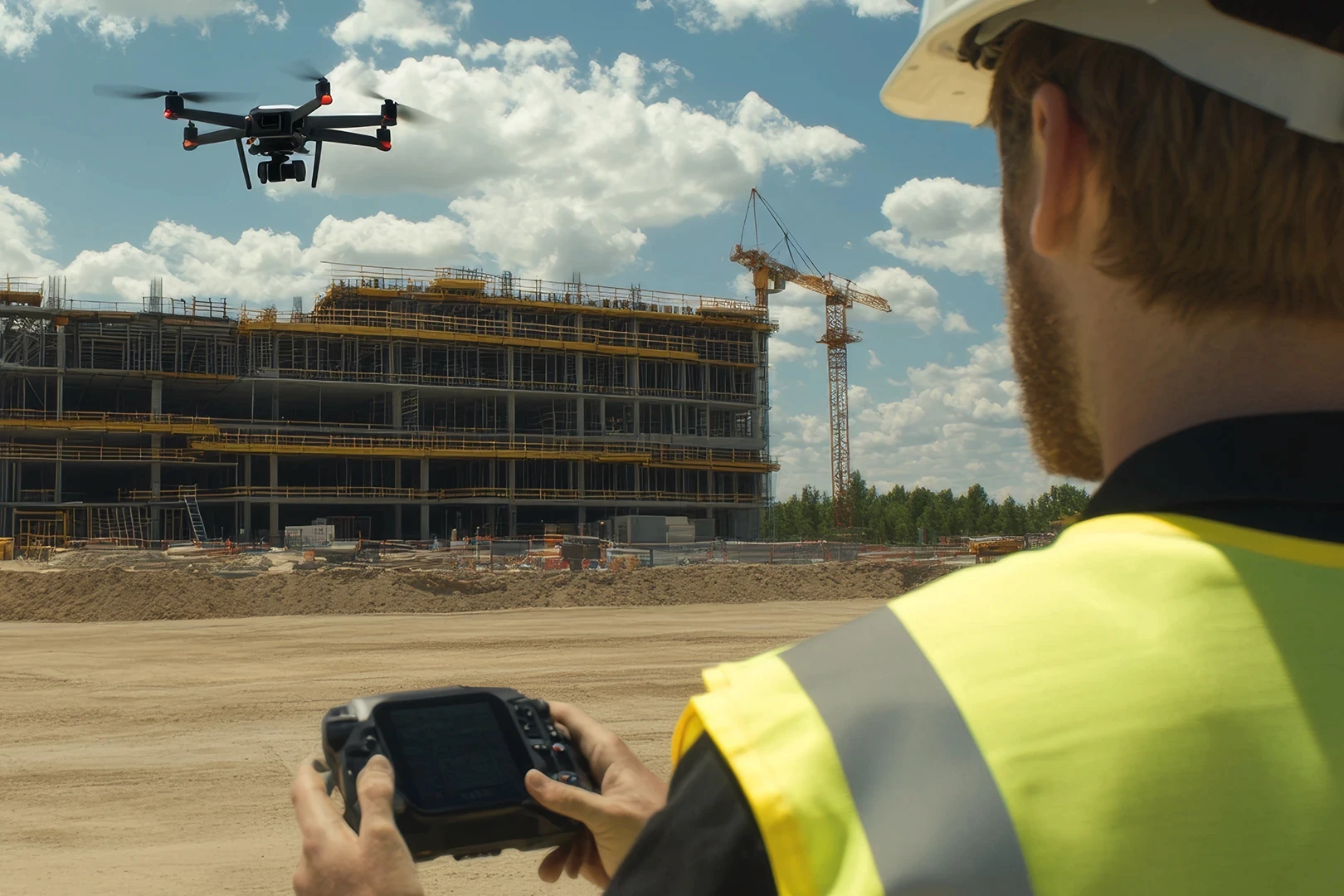
The complexity of construction projects grows year after year: more regulations, more risks, more pressure for results. However, information management and control have not yet kept pace with this evolution.
While sectors like manufacturing are already experiencing Industry 4.0, the construction site still relies on manual reports, in-person visits, and decisions based on impressions.
It is in this scenario that Reality Capture with Drones, 360º Cameras, and Laser Scanning stands out as one of the technologies to increase productivity and reduce rework.
Construct IN has launched a strategic report that reveals, for the first time in the country, how these technologies are being used in Brazil and what results are already proven.
The challenge of civil construction: more complexity, less control
Civil construction is one of the sectors under the greatest pressure for deadlines, cost, and compliance. Larger projects, more stakeholders involved, intensified technical detailing, but without a proportional increase in productivity. The lack of visibility of the job site is at the heart of this equation.
The result of this mismatch is well known:
Errors that only appear too late
Reworks that blow the budget
Slow decision-making based on perceptions
Contractual conflicts due to lack of evidence
The turning point: the evolution of Reality Capture in construction projects
To overcome this scenario, Brazilian companies have begun to adopt reality capture technologies capable of recording the job site continuously, accurately, and visually. Among the most consolidated solutions are:
Drones: ideal for large areas, volumes, and macro tracking
360° Cameras: fast, low-cost day-to-day documentation
Laser Scanning: millimeter precision, especially for installations and retrofitting
These tools bring reality to digital, creating a visual archive that becomes evidence, history, and a source of data for decision-making.
Adoption is still low in Brazil, but accelerating
Brazil is lagging behind leading countries.
14% of construction companies with more than 100 employees use Reality Capture
In the United States, France, and Germany, this number exceeds 50%
But interest is growing:
A 46% increase in searches related to these technologies over the past 2 years
The pandemic accelerated adoption in 41% of the interviewed companies
The data is from the Reality Capture in Brazil 2025 Report, which points to a clear path of expansion for the national market.
About the Reality Capture in Brazil 2025 survey
This report is based on a mixed research methodology, combining original field research with a review of previously published studies to ensure a comprehensive and contextualized analysis of the reality capture scenario in civil construction.
The primary research was conducted by research firm Dados X between February and May 2025. 120 interviews were conducted with professionals from various segments of construction — including commercial, industrial, residential, and infrastructure — to capture a representative view of the sector.
The study offers an in-depth strategic analysis of the core technologies — Drones (UAVs), 360o Cameras, and Laser Scanning/LiDAR —, examining their applications, benefits, challenges, and the evolution toward the Digital Twins concept.

360º Cameras: the gateway to technology
According to the survey, among companies that have already adopted Reality Capture, 38% started with 360° cameras. Some of the reasons why this technology is a reference are:
Simple and fast operation by the project's own team
Immediate results in documentation and communication
In addition, they integrate with other technologies to create hybrid workflows with drones and laser scanning.
Direct impact: less rework, more predictability
The study reinforces that reality capture reduces rework, travel, and accelerates decisions, transforming reactive management into proactive management. The return on investment is already becoming clear, and the survey showed this with some real results:
Every deviation detected early is money saved. This became evident with an average reduction of 22% in rework.
More strategic teams, with fewer hours on the road and less operational cost. An estimated R$ 18,000/month in savings on travel and commuting by the technical team was identified.
Construction becomes based on facts, not versions, optimizing communication with visual records and ensuring a +58% increase in customer and investor satisfaction.
The future: visual, intelligent, and connected construction sites
Adoption is still expanding in Brazil, but the trend is clear, and the surveyed industry leaders have clear expectations:
67% believe that Reality Capture will be standard in medium and large projects by 2027
74% of professionals under 35 prefer to work on visually documented projects
Download the Reality Capture in Brazil 2025 Strategic Report
Want to access all the charts, data, and analysis of this unprecedented study? The Reality Capture in Brazil 2025 Report brings all of this in-depth.
What is Reality Capture
The Overview of Reality Capture in the world and in Brazil
The impact on Productivity in Civil Construction
Reality Capture Technologies and their applications
The predominant reality capture technology in Brazil
The Return on Investment (ROI)
Barriers to adoption
Future Perspectives and Strategic Recommendations
The complexity of construction projects grows year after year: more regulations, more risks, more pressure for results. However, information management and control have not yet kept pace with this evolution.
While sectors like manufacturing are already experiencing Industry 4.0, the construction site still relies on manual reports, in-person visits, and decisions based on impressions.
It is in this scenario that Reality Capture with Drones, 360º Cameras, and Laser Scanning stands out as one of the technologies to increase productivity and reduce rework.
Construct IN has launched a strategic report that reveals, for the first time in the country, how these technologies are being used in Brazil and what results are already proven.
The challenge of civil construction: more complexity, less control
Civil construction is one of the sectors under the greatest pressure for deadlines, cost, and compliance. Larger projects, more stakeholders involved, intensified technical detailing, but without a proportional increase in productivity. The lack of visibility of the job site is at the heart of this equation.
The result of this mismatch is well known:
Errors that only appear too late
Reworks that blow the budget
Slow decision-making based on perceptions
Contractual conflicts due to lack of evidence
The turning point: the evolution of Reality Capture in construction projects
To overcome this scenario, Brazilian companies have begun to adopt reality capture technologies capable of recording the job site continuously, accurately, and visually. Among the most consolidated solutions are:
Drones: ideal for large areas, volumes, and macro tracking
360° Cameras: fast, low-cost day-to-day documentation
Laser Scanning: millimeter precision, especially for installations and retrofitting
These tools bring reality to digital, creating a visual archive that becomes evidence, history, and a source of data for decision-making.
Adoption is still low in Brazil, but accelerating
Brazil is lagging behind leading countries.
14% of construction companies with more than 100 employees use Reality Capture
In the United States, France, and Germany, this number exceeds 50%
But interest is growing:
A 46% increase in searches related to these technologies over the past 2 years
The pandemic accelerated adoption in 41% of the interviewed companies
The data is from the Reality Capture in Brazil 2025 Report, which points to a clear path of expansion for the national market.
About the Reality Capture in Brazil 2025 survey
This report is based on a mixed research methodology, combining original field research with a review of previously published studies to ensure a comprehensive and contextualized analysis of the reality capture scenario in civil construction.
The primary research was conducted by research firm Dados X between February and May 2025. 120 interviews were conducted with professionals from various segments of construction — including commercial, industrial, residential, and infrastructure — to capture a representative view of the sector.
The study offers an in-depth strategic analysis of the core technologies — Drones (UAVs), 360o Cameras, and Laser Scanning/LiDAR —, examining their applications, benefits, challenges, and the evolution toward the Digital Twins concept.
360º Cameras: the gateway to technology
According to the survey, among companies that have already adopted Reality Capture, 38% started with 360° cameras. Some of the reasons why this technology is a reference are:
Simple and fast operation by the project's own team
Immediate results in documentation and communication
In addition, they integrate with other technologies to create hybrid workflows with drones and laser scanning.
Direct impact: less rework, more predictability
The study reinforces that reality capture reduces rework, travel, and accelerates decisions, transforming reactive management into proactive management. The return on investment is already becoming clear, and the survey showed this with some real results:
Every deviation detected early is money saved. This became evident with an average reduction of 22% in rework.
More strategic teams, with fewer hours on the road and less operational cost. An estimated R$ 18,000/month in savings on travel and commuting by the technical team was identified.
Construction becomes based on facts, not versions, optimizing communication with visual records and ensuring a +58% increase in customer and investor satisfaction.
The future: visual, intelligent, and connected construction sites
Adoption is still expanding in Brazil, but the trend is clear, and the surveyed industry leaders have clear expectations:
67% believe that Reality Capture will be standard in medium and large projects by 2027
74% of professionals under 35 prefer to work on visually documented projects
Download the Reality Capture in Brazil 2025 Strategic Report
Want to access all the charts, data, and analysis of this unprecedented study? The Reality Capture in Brazil 2025 Report brings all of this in-depth.
What is Reality Capture
The Overview of Reality Capture in the world and in Brazil
The impact on Productivity in Civil Construction
Reality Capture Technologies and their applications
The predominant reality capture technology in Brazil
The Return on Investment (ROI)
Barriers to adoption
Future Perspectives and Strategic Recommendations
Sobre o autor
Isis Gonzaga
Journalist
Jornalista com expertise em Marketing de Conteúdo e Produto, transformando conhecimentos de copywriting em estratégias e lançamentos de sucesso.
cOMPARTILHE NAS REDES
Recomendado para você
carregar mais ↓



Subscribe to our newsletter
Explore nossas soluções
Entre em contato e descubra como a captura da realidade e dados centralizados podem ser a solução para a gestão de suas obras.
